
Systems View of Life
12 Nov 2026 -- Posted by :Many things have happened at Dupa Gard this season, with three major events. Also we have continued working on improving the land and preparing everything for the winter months. So, before settling in for the cozy part of the year, lets jump into what happened here since our last blog in the summer.
The events
The first major event was our yearly Campfire Permaculture Event. This year, we welcomed several interesting speakers. The programme included storytelling about local giants by Andrei, exploring our connection with nature through activities with Bogdan Romanică, a musical performance by Ursu and an introduction to Dragon Dreaming by Beatriz Gallego.
The subject stealing the show of the event was Dragon Dreaming. It is a method of turning dreams and ideas into reality through a process of dreaming, planning, doing and celebrating. It is certainly something valuable, especially in regards to our Dragon Dreaming Romania process, which has its first dreaming circle approaching in January.
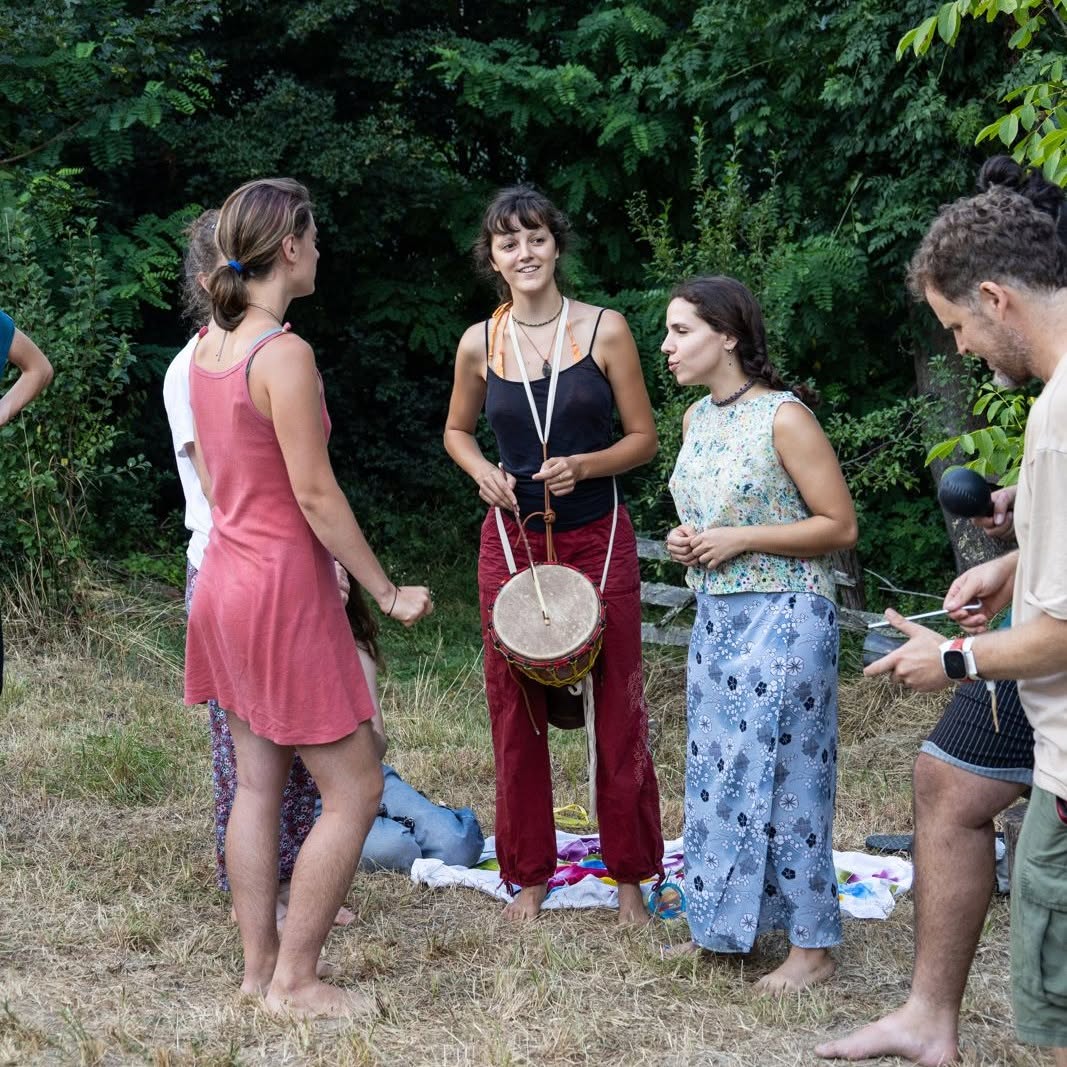
Bogdan Racolta facilitating a drum workshop
Of course, an important part of the event was spending time together outside the workshops and presentations. Sharing meals and conversations with people and enjoying the weather. A big thank you to Iamandi and Joanne for arranging the food throughout the event which was amazing! We also enjoyed a selection of delicious local snacks, including different varieties of plăcintă and apple cake from the Bucate de Poșaga food truck, which joined us on Friday and Saturday.
Our second major event was our SABER youth exchange funded by the Erasmus+ programme, focusing on soil. Together with Mishu, our soil expert, we organised nine days of activities in which young people could learn about the importance of healthy soil and the different ways of understanding and improving its quality.
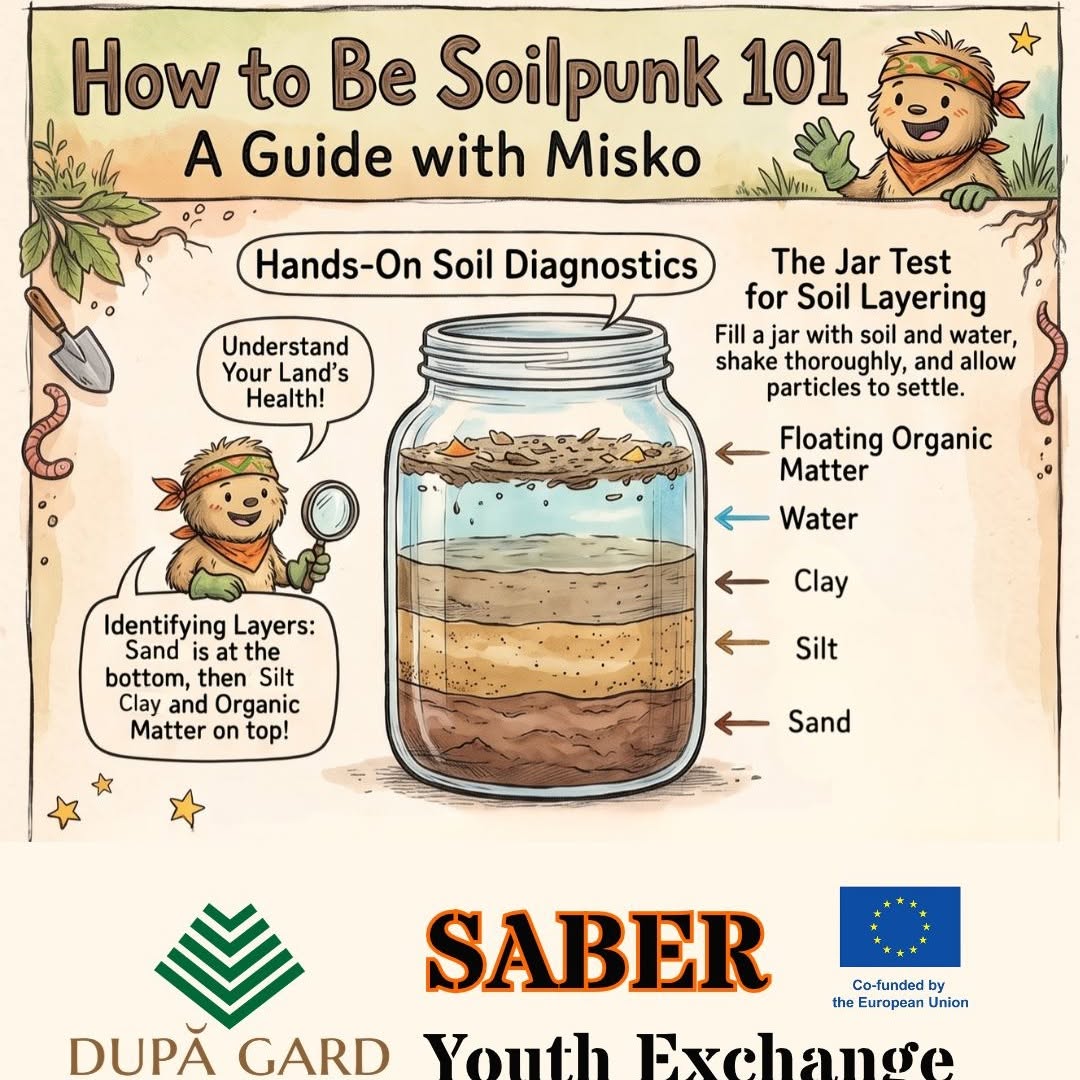
The participants explored how to identify different soil types, assess soil quality and recognise the characteristics that make soil suitable for growing plants. Instead of immediately trying to improve the soil, it is important to first understand what is already there and what it needs. By taking a lot of soil samples and letting the soil settle in an undisturbed jar, the participants gained a better understanding of what parts soil is made out of. Later, groups of Soilpunks created their own manuals including their main learnings:
Two days of the exchange were dedicated to connecting with the local communities of Sălciua and Poșaga de Jos. We organised a theatrical performance to introduce the local people to the youth exchange, explain its purpose and share some of the things the participants had learned during their youth exchange.
Also, we joined the village of Poșaga de Jos for its yearly cleanup day. Together with local residents, we spent the morning walking through the village streets collecting rubbish. it was a good opportunity for the participants to contribute to local life. Since the work went very quick with how many helping hands we had.
The final major event was organised by Andreas and Ioana, who hosted a DiscoverEU trip for young adults from neighbouring small villages. The trip gave them the opportunity to explore several European cities, travelling from Romania to Vienna, Berlin and Budapest before returning home.
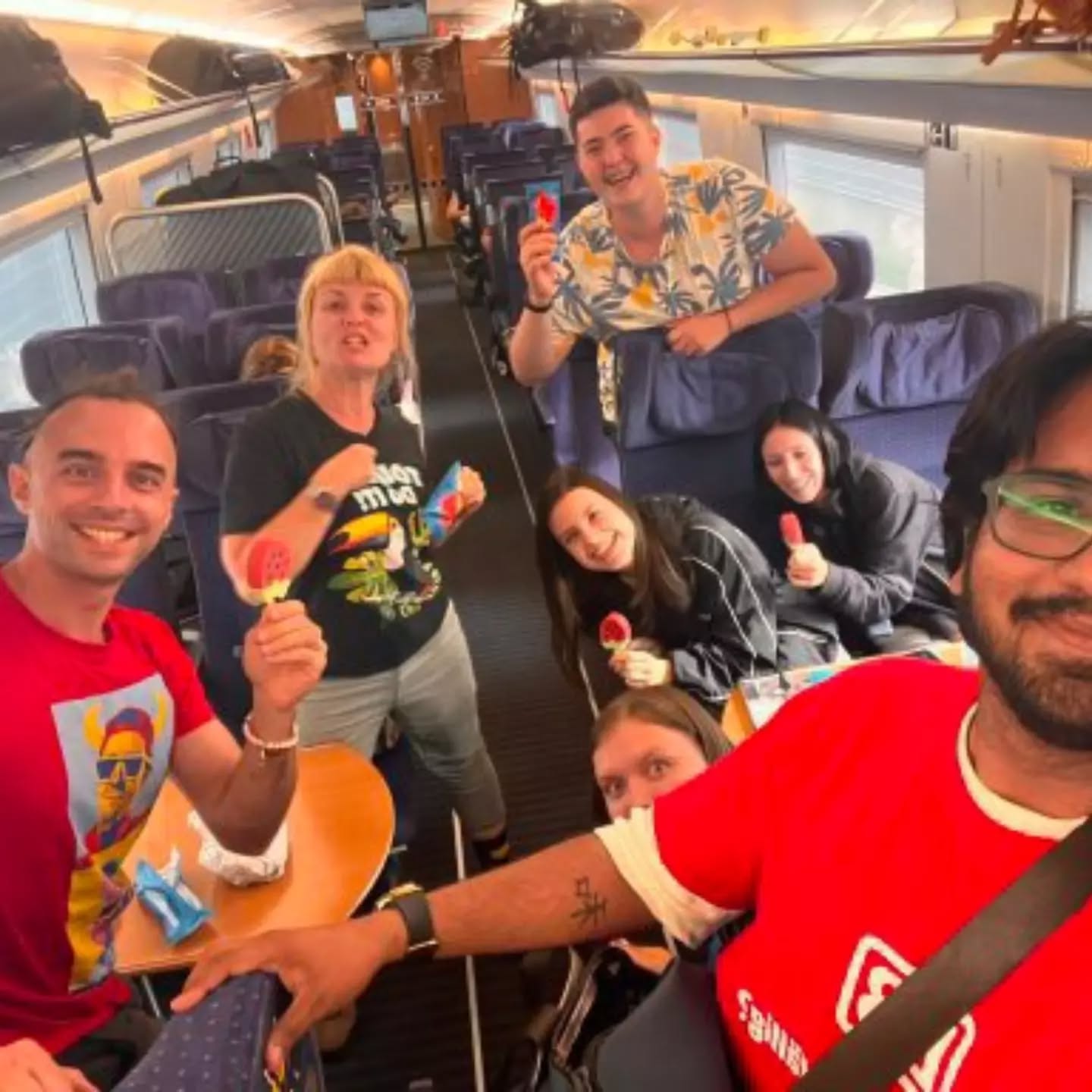
On an ICE train, travelling at 300km/h towards Berlin with some free ice-cream
For many of these young people, travelling outside Romania is not something they have had many opportunities to do. DiscoverEU makes it possible for young Europeans to experience different countries, cultures and cities, often for the first time. Travelling can help young people become more independent, discover new interests and gain a different perspective on the world.
Construction and project facility upgrades
Besides hosting these events, there has been plenty of work happening around the land. As the temperatures started dropping and the days became shorter, we continued working on several projects to improve the facilities and make the place more comfortable for future volunteers and visitors.
One of the bigger ongoing projects has been renovating the barn using natural building techniques. Our volunteers Tom, Clement and Stefan have continued working with cob, a traditional natural building material made from a mixture of clay, sand, straw and water.
Working with cob is a relatively simple process in terms of materials, but it requires quite a bit of physical effort. The mixture needs to be prepared, mixed thoroughly by stamping on it untill the parts are evenly distributed. It is also a good example of how locally available natural materials can be used in construction instead of relying entirely on industrial building products. Which is also a permaculture principal. Assessing the situation, what you have and finding solutions without relying on always buying stuff. Once finished, the renovated barn will become a more comfortable and functional space for future volunteers.
Another addition to the barn area was a clay oven. With the help of participants from the youth exchange, we managed to construct the oven at the back of the barn. For many people this day was the highlight of the youth exchange since it is something you don’t do in your daily life.
The oven has already been tested for the first time, and we are looking forward to using it more often next season. It will also play a role in the celebration of our 10-year Dupa Gard project anniversary, which will be celebrated at next years Campfire Permaculture Festival. Having a place to prepare food together using an oven we built ourselves is a nice addition to the project.
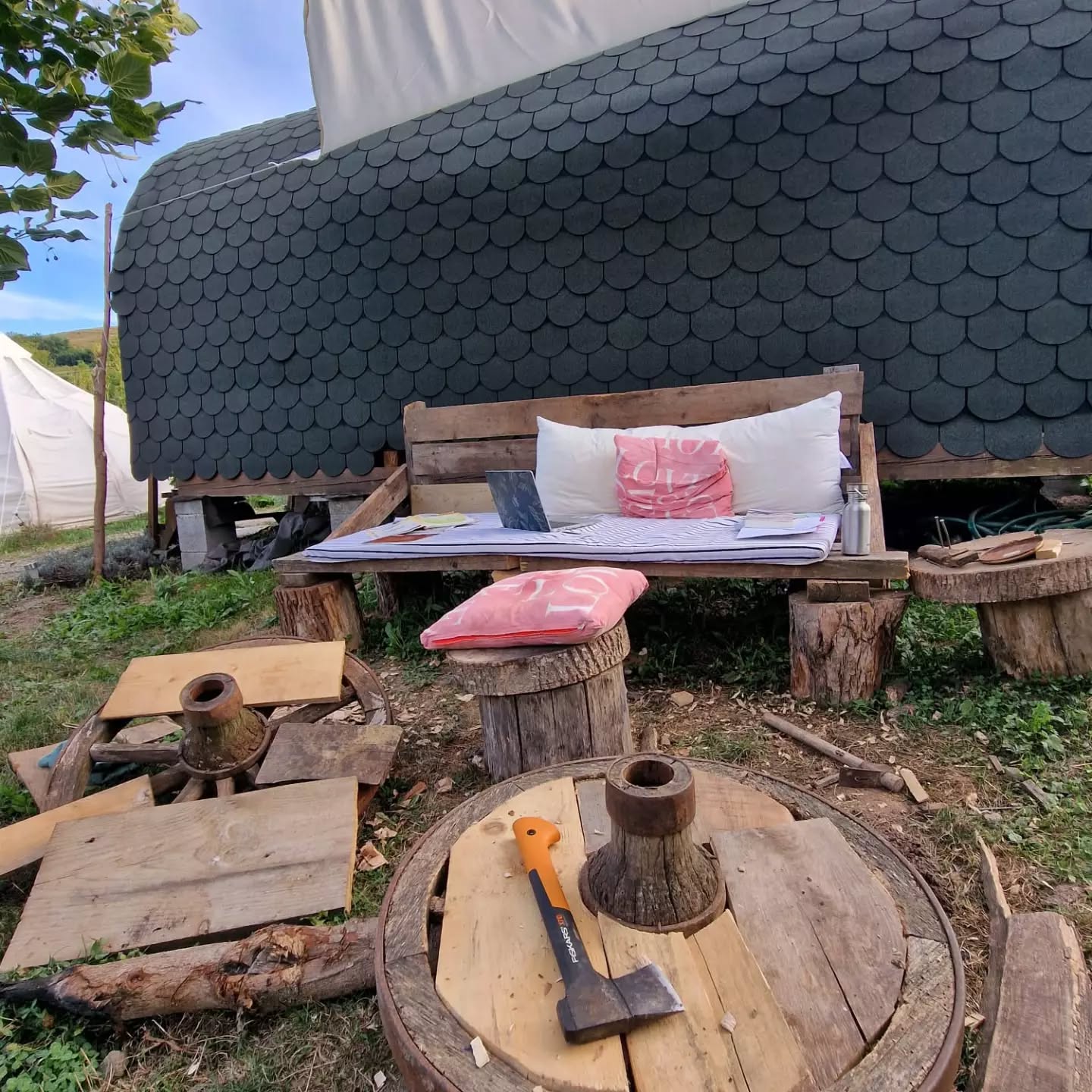
Down at the campsite, some smaller changes have taken place. Our volunteer Tom designed and built a bench to create another relaxing space where volunteers and guests can spend their downtime. With the addition of a coffee table made by Stefan from an old wooden wheel, the area has become a more comfortable place to spend free time. Next season, we will look into making some pillows for the bench to make it even more comfortable.
The apple harvest
This year we also had the pleasure of welcoming our first long-term volunteer, Stefan, who is staying with us for an entire year. He has now been at Dupa Gard for three and a half months and has already become involved in many different activities around the project.
One of the tasks during his time here was making the most of this year's apple harvest. We had an enormous amount of apples, which gave us the opportunity to experiment with different ways of preserving and processing them. Rather than letting a large part of the harvest go to waste, we tried to turn as much of it as possible into products that we could enjoy throughout the winter.
First, we made two large batches of apple cider using a traditional method of production. Instead of adding commercial yeast, we used the naturally occurring yeast present on the apple skins to start the fermentation process. Last year, our cider ended up turning into vinegar, so we were particularly happy that this year's batches developed much better. It was a nice result after all the work involved in collecting, preparing and processing the apples.
We also used the remaining apples to produce a large quantity of apple juice, which we placed in sterilized vacuumed bags and stored for later consumption throughout the year. Finally, we made several batches of jam to preserve even more of the harvest.
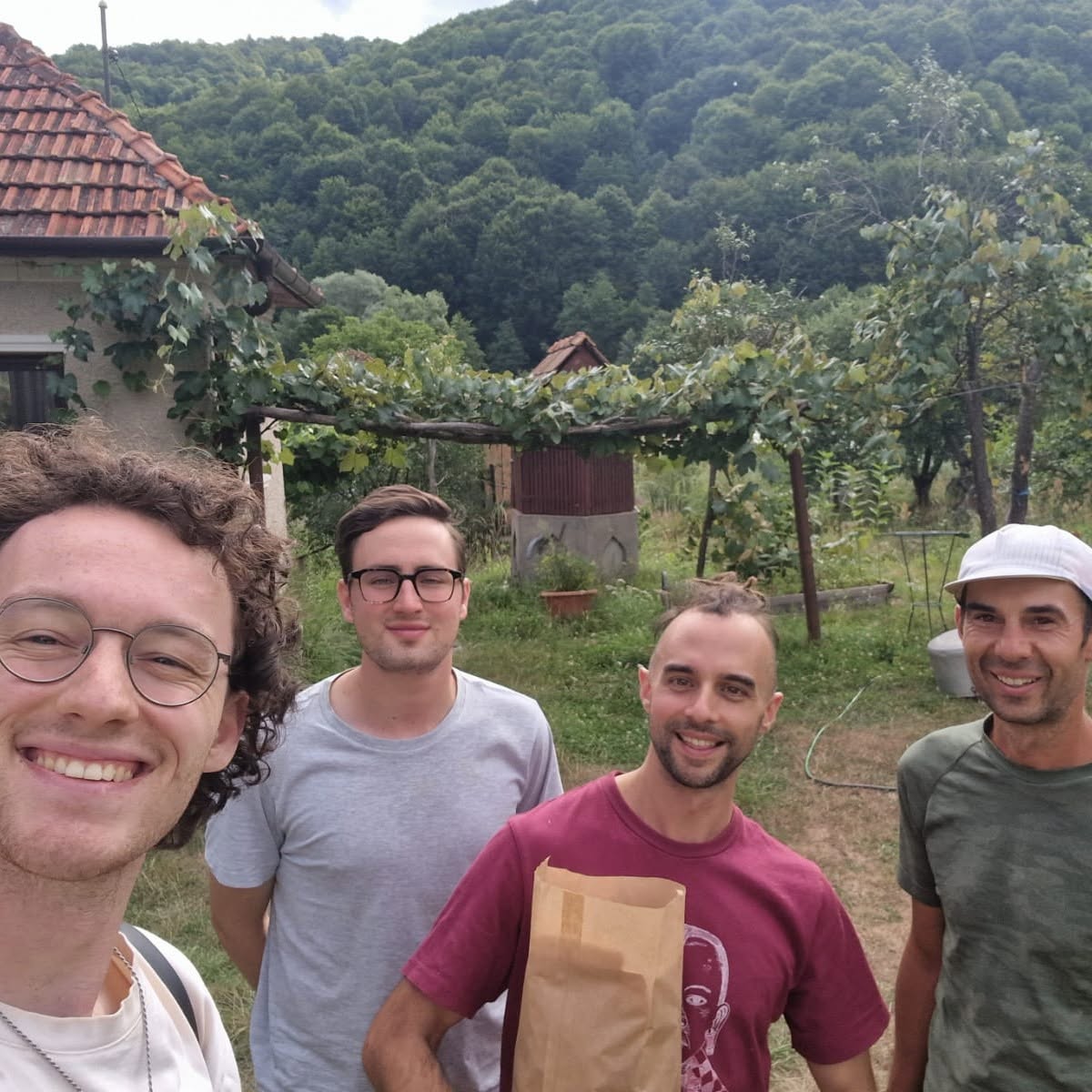
Visiting Dorin at Valea Drăganului
Stefan also had the opportunity to spend two weeks at another permaculture project in Valea Drăganului. We had visited this project once before to exchange knowledge and share experiences about different permaculture techniques. This time, Stefan stayed longer and had the opportunity to get involved in the daily activities of the project.
During those two weeks, he learned more about integrating animals into a permaculture system, cutting and stacking firewood for winter, preparing garden beds for the colder months and harvesting the final crops of the season.
Final preparations for winter
As nights are already freezing, tomato plants have been taken down, and we used the remaining unripe tomatoes to make salsa rather than letting them go to waste. We also collected seeds from the plants, so we can use them again next season.
We also tested the newly constructed clay oven for the first time, together with Miha and other participants that led a dissemination event on the youth worker training "Calm in Chaos" we had sent them to.
With the main outdoor activities now coming to an end, Dupa Gard is slowly entering its quieter winter period. There is still plenty to think about and prepare for, but for now, it is time to enjoy the results of a busy autumn and take a moment to appreciate everything that has happened. This is the celebrating stage of the dragon dreaming principle!
We are looking forward to next season, with many exciting event - firstly and foremost the 10-year anniversary of Dupa Gard (crazy how time flies!), the 5th edition of our Transylvania Permaculture Campfire, and much more TBA in the next few months... and in case you are wondering about the Systems View of Life, dont hesitate to get in touch and ask :)
Happy wintering everyone :)


